
Finding your True Self, beyond the conditioning of your personality, is one of the most profound acts of self-development you can undertake. It forms the foundation for fulfilment, healing, and authentic living.
Finding your True Self aligns you with your deeper purpose and connects you to life in a more authentic and integrated way. It helps guide your true life goals and opens you to spiritual wisdom and healing because it connects you to your deeper, spiritual nature. Understanding this is important because it underlies everything else I write about.
What is the True Self?
What is the True Self? I wrote about it in The True Self. It is the real you – your true nature and identity at the core of your being. It is more fundamental to who you are than your roles or the identities you create, adopt, or have assigned to you. It is the you that exists behind all of these, even behind the psychological construct of your personality or ego.
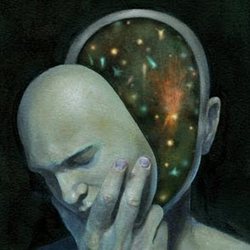
Often, we spend decades polishing a social mask – a collection of behaviours designed to keep us safe or liked – only to realise the person behind the mask has become a stranger. We become so adept at performing these roles that we lose sight of the silent witness residing beneath the surface.
Yet, this silent witness, your True Self, is the source of your greatest passion, creative power, talents, wisdom, and love. You experience it when you are most yourself and can often sense it in the space between your thoughts. So busy and distracted are our minds – some estimates suggest around 50,000 thoughts per day – that we are often unconscious of the True Self’s quiet, abiding presence. We may only catch a glimpse of it during a major life crisis, when facing our own mortality, or during a peak experience where life is felt with sudden, ego-transcending intensity.
Why Finding Your True Self Matters
Philosophers like Husserl and Heidegger explored similar territory through the lens of phenomenology. Husserl emphasised the importance of stepping back from inherited assumptions to experience reality directly – a process called Phenomenological Reduction that mirrors the mindfulness centring technique I describe below. Heidegger, meanwhile, described authenticity as a way of being that arises when we release social masks and stand in a more truthful relationship with our own existence. Both perspectives affirm that the True Self is not something we invent, but something we uncover when we become present to our own being.
Finding your True Self empowers you to develop and direct your personality so that you can be more yourself, more alive, and live closer to your full potential and true life purpose. By connecting you with a more fundamental state of being beyond the narrow identity of the ego, your True Self can also deepen your sense of unity with others, with life, and with the world around you.
Finding your True Self is therefore essential for meaningful self-development and authentic living. The aim is to align your personality with your True Self and live from that place more consistently. To me, this is the deeper meaning of life.
4 Ways of Finding Your True Self
- Meditation. Still your mind and place your attention on the space between your thoughts, becoming aware of the centre of your awareness that exists beyond thought or feeling. Let everything go and expand into your centre. From this stillness, your True Self can begin to be experienced more clearly, especially when you cultivate a sense of multidimensional presence.
- Mindfulness. Be mindful of your daily experience without becoming lost in or attached to thoughts and emotions that can take you into daydreams or unproductive states of mind. As you return to the present moment and come back to your centre, your True Self has more space to emerge, helping you live more authentically and respond with greater clarity and wisdom to daily life and challenges.
- Visualisation. Close your eyes, still your mind, and visualise yourself walking along a path to the deepest part of your being, or climbing to the peak of a mountain that represents your highest perspective. Visualise your True Self waiting there for you, perhaps as a wise teacher who is ready to guide you. The symbolism helps communicate with deeper parts of the mind.
- Journal writing. After stilling your mind and setting the intention to connect with your True Self, write down words or sentences that express the qualities of your True Self. Avoid writing qualities that other people expect from you or that you feel you should have. You can also try this prompt: Who would I be today if I weren’t trying to please anyone? What you write will gradually bring you closer to your True Self as you call your True Self in and intend it to come through your writing.
Staying Present to Your True Self
 Due to the demands of others, the stress of life events, or your own reactivity to unprocessed emotional triggers, staying present in your True Self can be challenging, and you may drift back into reactive patterns or experience the stasis of action paralysis. If this occurs, practise mindfulness as described above and consider whether your boundaries need strengthening so you can protect your time, energy, and attention. As you continue practising connecting with your True Self, you will gradually improve your ability to remain aligned with it. Techniques for releasing negative patterns that pull you away from your True Self are discussed in another post.
Remember, Finding your True Self is key to finding your true life purpose and gaining a clearer perspective on your life.
Next step: Book a Guidance Call to explore how you can embody your True Self more fully and integrate this transformation into your life.
Related Posts
The True Self
A Visualisation to Find Your True Self
A Meditation to Find Your True Self